
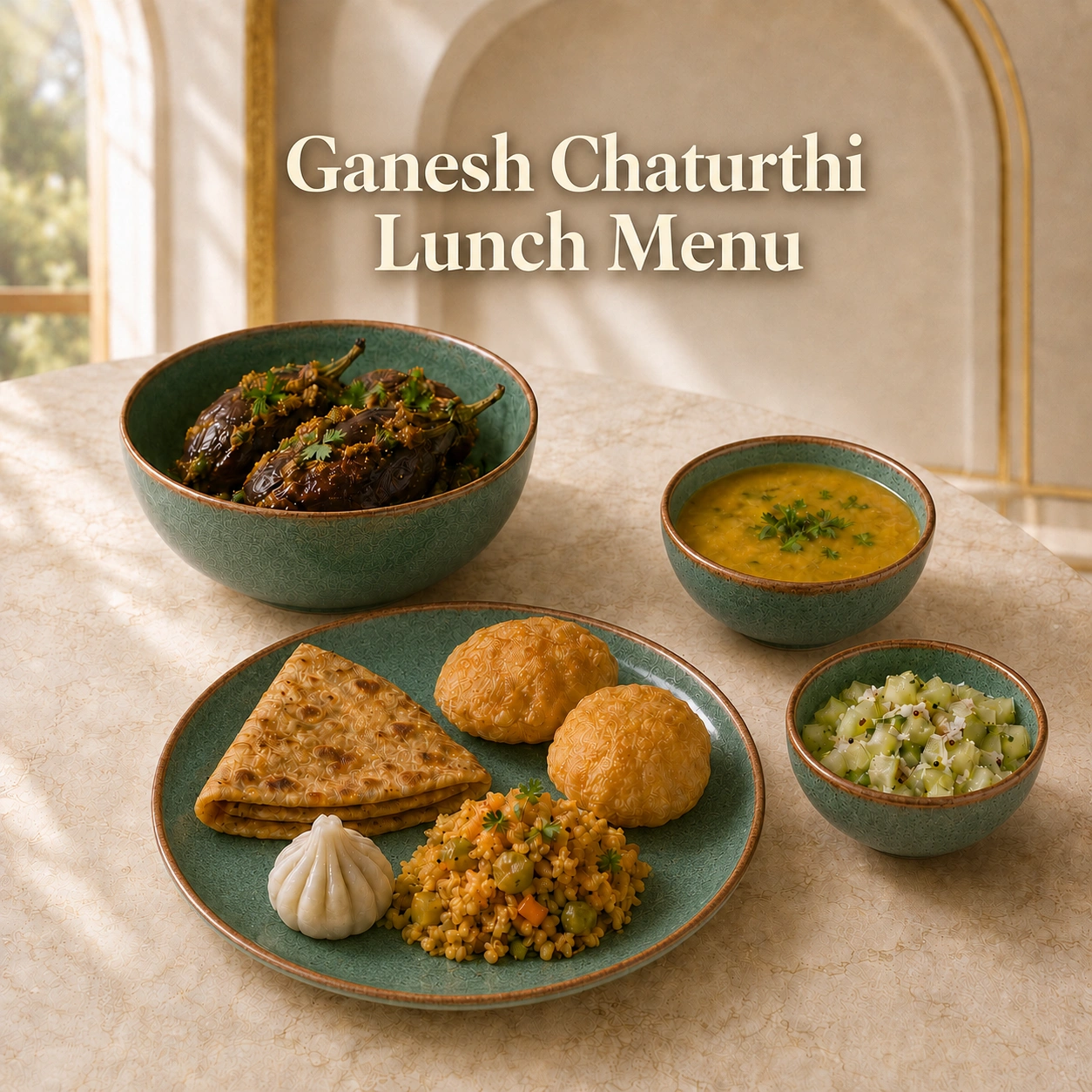
Ganesh Chaturthi Lunch Menu: 11 Traditional Maharashtrian Dishes for Family and Guests
Ganesh Chaturthi brings families together around devotion, traditions and food made with genuine care. While ukadiche modak may be the most anticipated preparation, a complete Ganesh Chaturthi lunch menu can include comforting dal and rice, festive vegetables, freshly prepared pooris, cooling accompaniments and traditional Maharashtrian sweets.
The challenge is not simply deciding what to cook. It is choosing dishes that complement one another, understanding what can be prepared in advance and serving everything without overcrowding the dining table.
This guide presents 11 dishes for a complete Maharashtrian festive menu, along with simpler five- and eight-dish combinations for smaller gatherings. You can adapt the quantities and selection according to your family’s traditions, dietary preferences and number of guests.
Quick Answer: What Should a Ganesh Chaturthi Lunch Menu Include?
A balanced Ganesh Chaturthi lunch menu can include:
- Ukadiche modak
- Puran poli
- Varan
- Steamed rice
- Masale bhaat
- Batata bhaji
- Bharli vangi
- Poori
- Kakdi koshimbir
- Sol kadhi
- Shrikhand
This combination provides sweets, rice, dal, vegetables, bread and cooling accompaniments. You do not need to make all 11 dishes for every celebration. A thoughtful Ganpati special food menu should suit the size of your gathering and the time available for cooking.
Three Ganesh Chaturthi Menu Options
Simple Five-Dish Menu for a Small Family
Choose this combination when you want a festive meal without spending the entire morning in the kitchen:
This simple Ganpati lunch covers one traditional sweet, a comforting varan-bhaat combination, one vegetable and a cooling accompaniment.
Traditional Eight-Dish Ganpati Lunch
For a family gathering, add more contrast and variety:
This Ganpati special food menu feels celebratory while remaining manageable for a home kitchen.
Complete 11-Dish Menu for Guests
Prepare the complete menu when hosting a larger family lunch:
Add papad, pickle, lemon and a little ghee if they are part of your family’s customary meal. These accompaniments need not become separate recipes or occupy large serving bowls.
1. Ukadiche Modak
Ukadiche modak is prepared with a soft rice-flour covering and a filling commonly made from coconut, jaggery and cardamom. The delicate pleated shape and warm filling make it an essential part of many Maharashtrian Ganesh Chaturthi celebrations.
Quick preparation overview
- Cook grated coconut and jaggery until the mixture comes together.
- Flavour it with cardamom and allow it to cool.
- Prepare a smooth rice-flour dough using hot water.
- Shape small portions into cups.
- Add the filling and bring the edges together into pleats.
- Steam until the outer covering is properly cooked.
Avoid crowding the steamer because the modaks need enough room to retain their shape. Serve them warm, with a small amount of ghee if preferred.
For detailed quantities and instructions, refer to the nestcase guide to five Ganesh Chaturthi prasad recipes.
2. Puran Poli
Puran poli adds a rich, celebratory element to a traditional Maharashtrian festive menu. Its filling is typically prepared from cooked chana dal and jaggery, flavoured with cardamom or nutmeg.
Quick preparation overview
- Cook chana dal until soft and drain any excess water.
- Combine the dal with jaggery and cook until the filling thickens.
- Flavour the mixture and allow it to cool completely.
- Prepare a soft wheat-flour dough.
- Enclose the filling inside a portion of dough.
- Roll gently and cook on a warm tawa using ghee as preferred.
The filling can be prepared earlier, but the polis are best cooked closer to the meal so they remain soft. Stack only a few at a time and keep them covered with a clean cloth or inside a suitable food-safe container.
3. Varan
Varan is a mild Maharashtrian dal commonly served with steamed rice and ghee. Its simplicity balances the stronger flavours of masale bhaat, bharli vangi and sol kadhi.
Quick preparation overview
- Wash and pressure-cook toor dal until completely soft.
- Mash the cooked dal to create a smooth consistency.
- Add turmeric and enough water to reach the desired thickness.
- Simmer gently and season according to your household recipe.
- Finish with ghee and a simple tempering, if traditionally used at home.
Serve varan in an individual katori or pour a modest portion beside steamed rice. Keep the remaining quantity in a shared serving bowl for refills.
4. Steamed Rice
Steamed rice may appear simple, but it forms the foundation of varan-bhaat and helps balance an elaborate Ganesh Chaturthi meal.
Rinse the rice until the water is clearer, use the correct quantity of water for the variety selected and allow it to rest briefly after cooking. Fluff it gently instead of repeatedly stirring it.
For a neat presentation, place a small mound of rice on one side of the dinner plate, leaving room for vegetables, poori and accompaniments. Add varan only when the guest is ready to eat so the plate does not become messy before serving.
5. Masale Bhaat
Masale bhaat brings aromatic spices, vegetables and rice together in one festive preparation. Recipes vary across households, with vegetables such as brinjal, peas, cauliflower or ivy gourd used according to preference and availability.
Quick preparation overview
- Rinse and soak the rice briefly.
- Heat ghee or oil and add the spices used in your family recipe.
- Add chopped vegetables and sauté them lightly.
- Add rice and Maharashtrian masala.
- Pour in measured hot water and cook until the rice is tender.
- Finish with grated coconut and fresh coriander if preferred.
Serve masale bhaat in a shared bowl rather than placing the entire quantity on the dining table. A smaller serving bowl can be replenished as required, keeping the festive arrangement comfortable for guests.
6. Batata Bhaji
Batata bhaji is a familiar potato preparation that pairs especially well with poori. Its mild flavour also makes it suitable for children and guests who prefer less-spicy food.
Quick preparation overview
- Boil the potatoes until tender and cut or crumble them.
- Heat oil and prepare a tempering with ingredients used in your household.
- Add curry leaves, green chilli and turmeric as preferred.
- Add the potatoes and season lightly.
- Finish with fresh coriander and lemon.
Avoid adding excessive liquid when the bhaji will be served with poori. A relatively dry consistency is easier to portion and keeps the plate organised.
7. Bharli Vangi
Bharli vangi adds depth and a more distinctive Maharashtrian character to the meal. Small brinjals are filled with a spiced mixture that may include coconut, peanuts, sesame and regional masala.
Quick preparation overview
- Wash the small brinjals and slit them without separating the sections.
- Prepare the filling according to your preferred family recipe.
- Fill each brinjal carefully.
- Arrange them in a wide pan with the remaining masala.
- Cook slowly until the brinjals are tender.
- Turn them gently to prevent the filled pieces from breaking.
Because bharli vangi contains gravy, serve it in a sufficiently deep bowl with a separate serving spoon. Do not overfill the bowl, especially when it must be passed around the table.
8. Poori
Freshly prepared poori makes a festive lunch feel complete and pairs naturally with batata bhaji and shrikhand.
Quick preparation overview
- Prepare a firm wheat-flour dough.
- Rest it only for the period required by your recipe.
- Divide it into evenly sized portions.
- Roll each portion without making it excessively thin.
- Fry in properly heated oil until puffed and evenly cooked.
- Drain well before transferring to a serving plate.
Prepare pooris in smaller batches rather than frying the entire quantity too early. Avoid closing freshly fried pooris inside a container while they are releasing heavy steam because condensation can affect their texture.
9. Kakdi Koshimbir
Kakdi koshimbir introduces a cool, fresh contrast to the richer dishes in the Ganesh Chaturthi lunch menu. It commonly combines cucumber with curd, coconut, roasted peanut powder or a simple tempering, depending on the household.
Prepare the cucumber close to serving time so it does not release excessive water. If salt makes the mixture watery, add it shortly before the meal.
Serve the koshimbir in small individual bowls. This prevents its moisture from spreading across the plate and allows guests to take only the quantity they want.
10. Sol Kadhi
Sol kadhi is commonly made with kokum and coconut milk. Its refreshing, tangy profile works especially well after a rich festive meal.
Quick preparation overview
- Soak kokum according to the recipe being followed.
- Extract or prepare coconut milk.
- Combine the kokum liquid with coconut milk.
- Add garlic, chilli or cumin only if used in your family recipe.
- Season and allow the flavours to settle.
- Stir before serving.
Present sol kadhi in suitable glasses or individual bowls, depending on how your family serves it. Do not fill glassware to the rim; leave sufficient space for guests to carry it comfortably.
11. Shrikhand
Shrikhand offers a chilled sweet alternative to warm modak and puran poli. It is prepared using thick strained curd, sugar and aromatic flavourings such as cardamom and saffron.
Quick preparation overview
- Strain fresh curd until the required thickness is achieved.
- Whisk it until smooth.
- Add powdered sugar gradually.
- Flavour with cardamom, saffron or nutmeg.
- Chill according to the recipe.
- Garnish lightly before serving.
Serve shrikhand in small katoris rather than placing it directly on the dinner plate. This improves portion control and prevents it from mixing with savoury food.
What Can Be Prepared Before Ganesh Chaturthi Lunch?
A successful festive meal becomes easier when preparation is divided between the previous evening and the day of the celebration.
Preparations that may be started earlier
Depending on the tested recipe, you can consider:
Refrigerate ingredient preparations when required by the recipe. Do not assume every cooked filling or dairy preparation can remain at room temperature overnight.
Preparations best completed closer to lunch
The objective is not to cook everything at the last minute. It is to identify which foods benefit most from being freshly finished.
How to Serve a Ganpati Lunch Without Crowding the Table
An eleven-dish meal does not require eleven vessels to remain on the dining table simultaneously.
Divide the arrangement into four zones:
1. Individual place setting
Each guest receives:
Quarter plates can be added for poori, puran poli or sweets when required.
2. Shared centre
Keep only the dishes currently being served in the centre:
3. Refill station
Keep reserve portions on a sideboard or kitchen counter:
This approach keeps the table comfortable while ensuring refills remain readily available.
4. Dessert stage
Remove empty main-course vessels before introducing modak, puran poli or shrikhand. Serving sweets as a distinct stage gives them more visual importance and prevents the place setting from feeling overloaded.
A 14-piece dinner set can establish six coordinated plate-and-katori settings with two shared serving bowls. If you regularly use separate plates for poori, starters or desserts, read the nestcase comparison of 14-piece and 20-piece dinner sets.
Which Dinnerware Works for Each Dish?
| Menu component | Suggested serving piece |
|---|---|
| Steamed rice | Dinner plate or shared serving bowl |
| Varan | Individual katori and shared serving bowl |
| Masale bhaat | Shared serving bowl |
| Batata bhaji | Shared serving bowl |
| Bharli vangi | Deep serving bowl |
| Poori | Dinner or quarter plate |
| Kakdi koshimbir | Individual small bowl |
| Ukadiche modak | Flat dinner or quarter plate |
| Puran poli | Dinner or quarter plate |
| Shrikhand | Individual small bowl |
| Sol kadhi | Glass or individual bowl |
Explore nestcase Dinner Sets and Bowls & Platters to build a coordinated festive arrangement.
How Much Food Should You Prepare?
Exact quantities depend on guest appetite, age, serving time and the number of menu items. A guest will generally take smaller portions when the menu contains several dishes.
Before deciding quantities, note:
Avoid doubling every recipe merely because the guest list doubles. Rice, bread, vegetables, beverages and sweets may be consumed at different rates.
Common Ganesh Chaturthi Lunch-Planning Mistakes
Ganesh Chaturthi Lunch Preparation Checklist
The previous evening
On the morning of the celebration
Frequently Asked Questions
What is included in a traditional Ganesh Chaturthi lunch menu?
A traditional menu may include ukadiche modak, puran poli, varan-bhaat, masale bhaat, batata bhaji, bharli vangi, poori, koshimbir, sol kadhi and shrikhand. The selection varies by household and region.
What is a simple five-dish Ganpati menu?
A manageable five-dish menu can include ukadiche modak, varan, steamed rice, batata bhaji and kakdi koshimbir.
What can I prepare one day before Ganesh Chaturthi lunch?
Certain fillings, spice mixtures and ingredient preparations may be completed earlier when the recipe permits. Pooris, rice, koshimbir and steamed modak generally benefit from being finished closer to serving.
Which sweet is traditionally associated with Ganesh Chaturthi?
Ukadiche modak is closely associated with Maharashtrian Ganesh Chaturthi celebrations. Other popular festive sweets include puran poli, ladoo, kheer and shrikhand.
What should I serve with puran poli?
Puran poli may be served with ghee, milk, katachi amti or other accompaniments used in your family tradition.
How can I serve eleven dishes on a small table?
Keep only two or three active dishes in the centre. Place reserve quantities, additional pooris, beverages and desserts on a nearby sideboard or counter.
Is a 14-piece dinner set sufficient for six guests?
A fourteen-piece configuration with six dinner plates, six katoris and two serving bowls can create six coordinated settings. Additional serving vessels may be required for an eleven-dish meal.
Do I need quarter plates for a Ganpati lunch?
Quarter plates are helpful for pooris, puran poli, modak and other sweets. They allow these foods to remain separate from dal, rice and vegetable gravies.
How should modaks be presented?
Arrange modaks with a little space between them on a flat plate. Avoid piling delicate steamed modaks because their pleats can become damaged.
What drink can be served with a Maharashtrian festive meal?
Sol kadhi, mattha or plain water can accompany the meal. The final choice depends on the dishes and your family’s preferences.
A Festive Meal Made for Sharing
The best Ganesh Chaturthi lunch menu is not necessarily the longest one. It is a menu your family can prepare comfortably, serve thoughtfully and enjoy together.
Start with a simple five-dish meal when hosting a small family. Expand it to eight dishes for a traditional Ganpati lunch or prepare the complete eleven-dish Maharashtrian festive menu when welcoming more guests.
Cook according to your family’s traditions, introduce dishes in stages and keep the table spacious enough for everyone to eat comfortably.
Bring every part of your Ganpati special food menu together with coordinated nestcase plates, katoris and serving bowls—made for festive meals that move naturally around the family table.