
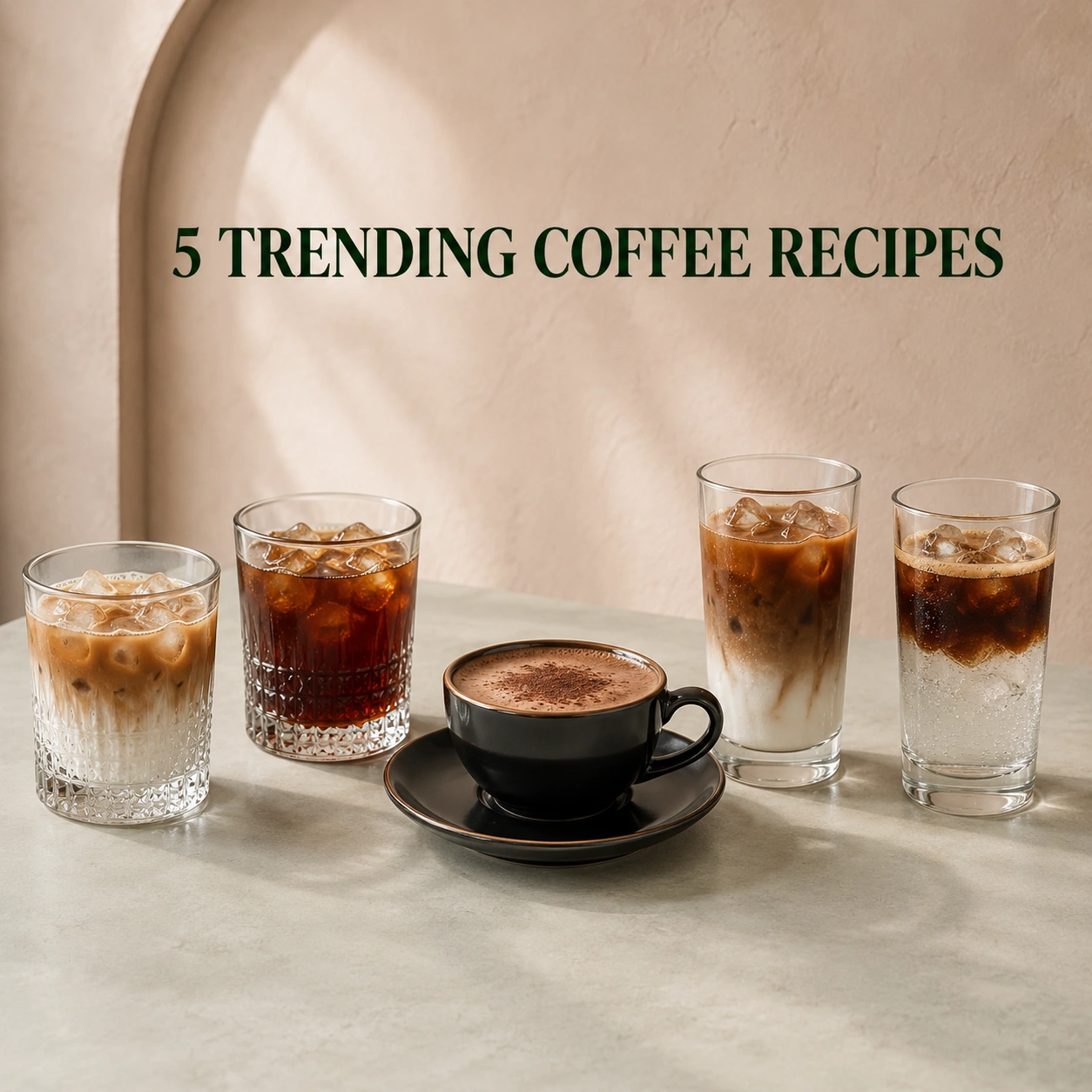
Coffee trends are much more fun when you can actually drink them. This guide skips the long coffee glossary and focuses on five café favourites worth recreating at home: a creamy vanilla iced latte, smooth cold brew, chocolatey café mocha, frothy brown sugar shaken espresso and sparkling espresso tonic.
Every recipe makes one serving unless stated otherwise. Adjust the sweetness and coffee strength to suit your taste.
No espresso machine? Dissolve 2 teaspoons of instant coffee in 30 ml hot water for each espresso shot required. It will not taste identical to espresso, but it makes an easy home version.
Five popular coffee recipes at a glance
| Coffee | Flavour | Best for | Time |
|---|---|---|---|
| Vanilla iced latte | Creamy and gently sweet | An easy everyday coffee | 5 minutes |
| Cold brew | Smooth and bold | Preparing ahead | 12–16 hours |
| Café mocha | Rich and chocolatey | A comforting treat | 10 minutes |
| Brown sugar shaken espresso | Bold, frothy and caramel-like | An afternoon lift | 7 minutes |
| Espresso tonic | Crisp, sparkling and bittersweet | Warm days | 5 minutes |
1. Vanilla Iced Latte
An iced latte is one of the simplest café-style drinks to prepare. Espresso supplies the depth, chilled milk makes it creamy and vanilla brings a familiar sweetness.
Ingredients
Recipe
- Brew the espresso and let it stand for about a minute.
- Add vanilla syrup to a 300–370 ml glass.
- Fill the glass with ice and pour in the milk.
- Slowly add the espresso to create visible layers.
- Stir before drinking and add more syrup only after tasting.
Easy variation: Replace vanilla with caramel syrup, or use a few drops of vanilla extract and sugar. Use two espresso shots for a stronger coffee.
Serve it in: a clear 300–370 ml nestcase glass so the milk and coffee layers remain visible.
2. Classic Cold Brew
Cold brew is made by steeping coarse coffee grounds in cool water for several hours. Prepare the concentrate ahead, then dilute it with water or milk whenever you want a chilled coffee.
Ingredients for four servings
Recipe
- Combine the coffee and water in a clean jar.
- Stir gently until all the grounds are wet.
- Cover and steep in the refrigerator for 12–16 hours.
- Strain through a fine sieve lined with a clean filter or muslin cloth. Avoid pressing the grounds aggressively.
- For one drink, begin with equal parts concentrate and chilled water or milk over ice. Adjust to taste.
Important: The strength changes with the beans, grind, steeping time and ratio. Treat the result as a concentrate and dilute gradually. Keep it covered and refrigerated; once milk is added, serve promptly and follow normal dairy-handling guidance.
Serve it in: a 370–510 ml nestcase tall glass with room for ice and dilution.
3. Café Mocha
A mocha brings coffee and chocolate together in one comforting drink. It is richer than a latte but can still remain coffee-forward when the cocoa and sugar are kept balanced.
Ingredients
Recipe
- Mix the cocoa, sugar and hot water in a mug until smooth.
- Stir in the freshly brewed espresso.
- Warm the milk until steaming, without vigorously boiling it.
- Froth with a handheld frother or whisk, if desired.
- Pour the milk into the chocolate-coffee mixture and stir gently.
- Finish with a restrained dusting of cocoa.
Make it iced: Allow the coffee to cool briefly. Mix it with the cocoa base, pour over ice and add chilled milk.
Serve it in: a 280–350 ml nestcase ceramic cup when hot, or a 300–370 ml glass when iced.
4. Brown Sugar Shaken Espresso
Shaking espresso with brown sugar and ice rapidly chills the coffee and creates light foam. A modest pour of milk softens it without turning it into a full latte.
Ingredients
Recipe
- Stir the brown sugar and cinnamon into the hot espresso.
- Add the coffee and 6–8 ice cubes to a tightly sealed shaker or leak-resistant jar.
- Shake firmly for 10–15 seconds while holding the container securely.
- Fill a tall glass with fresh ice.
- Strain in the shaken espresso and top with chilled milk.
Safety note: Never shake hot liquid alone in a sealed container. The ice begins cooling the espresso immediately, while adequate empty space lets the drink move and aerate.
Serve it in: a 370–510 ml nestcase glass with room for ice, foam and milk.
5. Espresso Tonic
Espresso tonic combines concentrated coffee with chilled tonic water. The result is sparkling, bittersweet and refreshing, with a striking temporary layer when the espresso is poured slowly.
Ingredients
Recipe
- Fill a 300–370 ml glass with ice.
- Slowly pour in the chilled tonic water.
- Add the espresso gently over the back of a spoon.
- Garnish with a small strip of thoroughly washed citrus peel.
- Stir lightly before drinking.
Avoid an overflow: Hot espresso can make tonic foam quickly. Keep the tonic cold, use a roomy glass and add the espresso slowly.
Serve it in: a clear geometric nestcase glass that highlights the bubbles and contrasting layers.
Which coffee should you try first?
Five tricks for better coffee at home
1. Measure before adjusting
Begin with the recipe, taste, and then change the sweetness or milk. Adding too much at the start is difficult to correct.
2. Use plenty of ice
Too little ice melts quickly and dilutes a cold drink. Use enough to keep it properly chilled while leaving comfortable space below the rim.
3. Brew close to serving
Espresso-based drinks taste best when made fresh. Cold brew is the exception because its long, cool extraction is the recipe.
4. Match the drinkware to the recipe
Choose transparent glasses for layered and sparkling coffees, tall glasses for ice-heavy recipes, and ceramic cups for hot mocha. The right capacity makes building and serving each drink easier.
5. Keep the garnish restrained
A small citrus peel, cocoa dusting or cinnamon pinch is enough. Excessive toppings hide the drink and add unnecessary sweetness.
Frequently Asked Questions
Which recipe is easiest for a beginner?
The vanilla iced latte is the easiest: combine espresso, syrup, ice and milk. Café mocha is also forgiving because its sweetness can be adjusted after mixing.
Can I make these recipes without an espresso machine?
Yes. For one espresso-style serving, dissolve 2 teaspoons of instant coffee in 30 ml hot water. The flavour and texture will differ from espresso, but it works as an accessible substitute.
What is the difference between iced coffee and cold brew?
Iced coffee is usually brewed with hot water and then chilled or poured over ice. Cold brew is extracted with cool water for many hours, giving it a different preparation and flavour.
Can I use plant-based milk?
Yes. Oat, almond, soy or another preferred drink can be used in the latte, mocha and shaken espresso. Sweetness and frothing behaviour vary between products.
Why did my espresso tonic overflow?
Fresh espresso can cause carbonated tonic to foam rapidly. Use a glass with headroom, keep the tonic cold and pour the coffee slowly.
How long should cold brew steep?
Use 12–16 hours in the refrigerator as a starting range. Bean, grind and ratio affect extraction, so adjust the next batch based on taste.
Can I reduce the sugar?
Yes. Begin with less syrup or sugar, then add more only if needed. Cold brew and espresso tonic can also be served without added sweetener.
Bring the café trend home
You do not need an elaborate coffee bar to enjoy these drinks. Start with one recipe, use a cup or glass with enough room for the ingredients, and adjust the strength and sweetness until it tastes right to you.
Explore nestcase cups and mugs for hot coffee, glassware for iced and sparkling drinks, and storage jars for an organised coffee corner.
CTA: Pick your favourite recipe, save it for your next coffee break and serve it in nestcase drinkware made for everyday moments.